

Humane Fort Wayne Rescues 43 Dogs From Puppy Mill
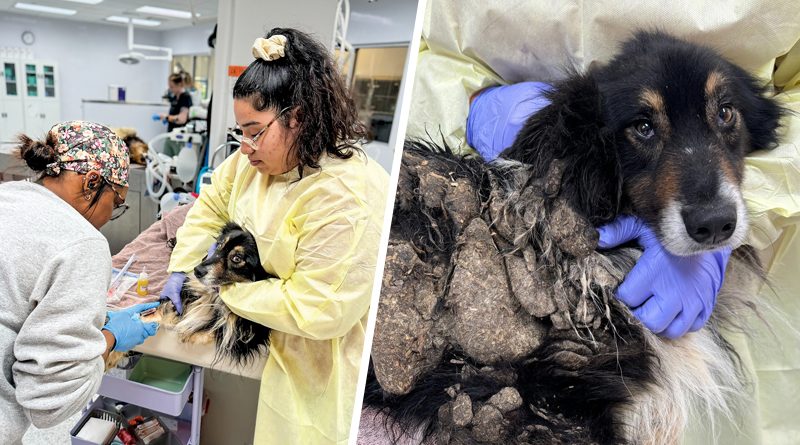
Recently, Humane Fort Wayne continued its involvement in an emergency rescue response following the discovery of an active puppy mill in Dekalb County, Indiana.
In partnership with the Dekalb County Sheriff’s Office, the organization aided in the seizure and immediate placement of 43 dogs and one pigeon from a private residence where the animals were confined to cages in a basement under conditions described as abysmal, inhumane, and in violation of Indiana law governing commercial breeding operations.
Humane Fort Wayne was recently contacted by the Dekalb County Sheriff’s Animal Control Officer regarding an active puppy mill. That evening, staff veterinarians, animal care teams, and volunteers from two partner rescue organizations, Shadarobah Horse Rescue and Loyal K9 Rescue, transported all 43 dogs and one pigeon to Humane Fort Wayne’s shelter at the Sharon Bodenhafer Critter Center. Staff worked late into the night to vaccinate every animal and place each dog in a clean kennel with fresh food and water. The pigeon was transferred to a bird rescue.
That week dogs were bathed. Several required sedation to be shaved down to the skin, as years of neglect had left them with matted fur saturated with urine and feces. In one case, the matted fur shaved from a single dog weighed seven pounds.
Humane Fort Wayne extends its gratitude to Shadarobah Horse Rescue, Loyal K9 Rescue, the Dekalb Humane Society, Justice Animal Rescue League (Grover Hill, Ohio), and Midwest Aussie Rescue for their partnership in this response, as well as to the community members who have donated food, supplies, and financial support.

There are an estimated 10,000 puppy mills operating in the United States, fewer than 3,000 of which are regulated by the USDA. A report released by Humane World for Animals identified 13 states home to the industry’s 100 worst offenders — and operations in Grabill, Woodburn, and Nappanee, Indiana made the list.
Indiana has historically failed to hold commercial breeders accountable. In response, many Hoosier cities and towns passed local ordinances banning the sale of dogs and cats in pet stores, most of which source animals from commercial breeders.
In 2024, however, state legislators, responding to lobbying from national pet store chains including Petland, passed HB 1412, authored by Rep. Beau Baird (Greencastle). While marketed as an “anti-puppy mill” measure, the bill included language that nullified all existing local ordinances and reopened the puppy pipeline to pet stores statewide.
HB 1412 also required the state to conduct random inspections of both puppy mills and shelters, but assigned that responsibility to an agency that is underfunded and understaffed. To Humane Fort Wayne’s knowledge, no area shelter has been inspected.
The bill further defines a “commercial dog breeder” as anyone maintaining more than 19 unaltered female dogs, leaving smaller operations with little to no oversight. The Dekalb County puppy mill may have initially operated below this threshold, and without intervention, conditions escalated to crisis levels.
Humane Fort Wayne is calling on Indiana state legislators to repeal HB 1412 and replace it with meaningful, enforceable protections for animals. The organization is also urging Allen County and Fort Wayne City Council to introduce and fund local ordinances that protect companion animals.
“Nonprofit animal shelters cannot keep up with the influx of hoarding, cruelty, and illegal commercial breeding happening in northeast Indiana,” said Humane Fort Wayne Executive Director Jessica Henry-Johnson. “We shouldn’t have to. It is on all of us — citizens, county governments, and state legislators — to say something and act.”
Community members are encouraged to contact their state legislators and hold them accountable. To find advocacy resources and legislator contact information, visit: HumaneFW.org/advocacy
Humane Fort Wayne urges the public to watch for the following warning signs of how to identify a puppy mill:
- No access to the breeding facility. The breeder refuses to show you where dogs are raised, refuses to show you the mother, or offers to meet in a parking lot or other off-site location.
- Multiple breeds and constant availability. The breeder sells many different breeds or has puppies available year-round.
- Suspicious sales methods. Selling primarily through websites, pet stores, or online marketplaces.
- Poor puppy health. Puppies with runny noses, lethargy, dirty or foul-smelling coats, or signs of stress and fearfulness.
- Lack of documentation. No vet-checked records, vaccination history, or health clearances on veterinary letterhead.
- No return policy. The breeder will not accept the dog back if you can no longer care for it.
If you are seeking a specific breed, Humane Fort Wayne recommends contacting the local kennel club for information on reputable breeders or breed-specific rescues. Adopting from a reputable shelter or rescue is always encouraged. For guidance, contact Humane Fort Wayne directly.
Humane Fort Wayne believes that when pets have safe, forever homes, they thrive. And with their loving companionship, so does the organization. From adoption and pet retention programs, to spay/neuter and wellness services, to community outreach and education, Humane Fort Wayne works tirelessly to prevent the incidence of euthanasia and to promote the happiness, safety and well-being of pets and the people who love them. Visit humanefw.org for info.

> Read More Information About Us
> More Articles Written By Our Staff
- Bishop Luers High School Students Positive Impact On Community Organizations - May 11, 2026
- 122nd Fighter Wing Completes Historic F-16 Conversion - May 11, 2026
- Three Exhibitions Open At Artlink - May 11, 2026