

U.S. Savings Bond Program | The History of Ordinary Things
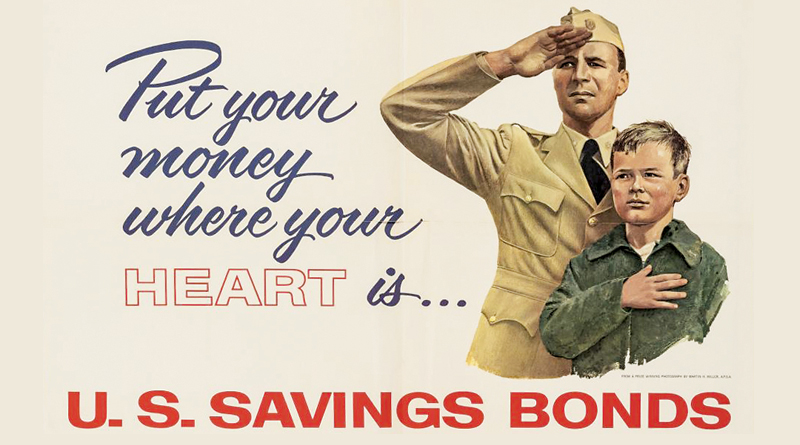
The sale of U.S. government securities dates back over 230 years. In 1776, private citizens bought more than $27 million in government bonds to help finance the Revolution, buying them on trust that they would see their money again. Their confidence proved justified when after the war the new government paid off all its obligations in full, and on time. Small-denomination bonds were sold during the Civil War and again in 1898 for the Spanish-American War.
The purchaser of the Savings Bond pays face value of the bond which earns a guaranteed rate of return at maturity, often 30 years. The bond may have a fixed and a variable earnings rate. Savings Bonds were an important financing vehicle for national projects from the purchase of the Louisiana Territory to the building of the Panama Canal, from the acquisition of Alaska to the completion of the railroad. Bonds were also sold to help finance the heavy costs of our nation’s wars.
In the 1930’s, the U.S. Treasury reintroduced the Savings Bond to broaden the base of the public debt with small savers. This reduced their dependence on large private investors and the commercial banking system. It was also intended to encourage citizens to save and to become more concerned about national policy.
In 1941, Pres. Franklin D. Roosevelt announced a new “Defense” Savings Bond, the Series E (as well as Defense Stamps). They were sold at 75% of face value and returned 2.9% compounded semiannually. Roosevelt invited all citizens to join him in “one great partnership.”
E Bonds were essential to financing World War II. With the Japanese attack on Pearl Harbor, Defense Bonds became “War Bonds” with $54 billion sold between 1941-1945. The Payroll Savings Plan was introduced with the cooperation of business, industry, government, and the military servicing the “everybody every payday” campaign.

In peacetime, the name became the Security Bond. In the 1960s Vietnam military personnel were buying bonds in large numbers.
By the 1990s new, often employer-based savings programs, contributed to the decline of the Savings Bonds despite offering higher return rates. In 1990, the Treasury created the Education Savings Bond.
In 1998, Series I was introduced. The “paper” bonds which are held by the purchaser, were phased out in 2011, replaced by electronic bonds. Today the U.S. Bond is no longer a primary investment tool for most Americans. Some of us are still waiting our 30 years on a couple paper bonds in the lockbox. Check your maturity date the next time you handle them.

> Read Full Biography
> More Articles Written By This Writer
- What Is Sewing Machine Day? | The History of Ordinary Things - May 24, 2026
- U.S. Savings Bond Program | The History of Ordinary Things - April 27, 2026
- Tidbits On Clean Shaves | The History of Ordinary Things - March 31, 2026