

What To Write About For March? | Seasons, Stories & Sundays
Like past March articles, we could write about St. Patrick who is synonymous with March. Or, since the entire month is dedicated to celebrating the contributions of women in society, we could devote this entire column to Women’s History.
But the month references several other notable people as well. In fact, the Catholic Church dedicates the entire month to St. Joseph, the husband of the Virgin Mary. His solemnity is celebrated on March 19th and is a significant feast day in the liturgical calendar, which sometimes outranks St. Patrick’s Day in terms of religious observance if they fall on the same day.
Dr. Seuss (Theodor Geisel) is the beloved children’s author and illustrator who was born on March 2, 1904. His birthday often is celebrated with reading and educational events across the United States. He was an American author, illustrator and cartoonist, and is famous for his children’s books. He authored over 60 books before he died on September 24, 1991.
We could delve into Albert Einstein, the renowned German-born theoretical physicist and philosopher born on March 14, 1879. He revolutionized physics with his theory of relativity and the equation E=mc². His work is considered the foundation of modern physics, alongside quantum mechanics. But that’s all pretty heavy stuff!
Maybe you’d like to learn more about John Philip Sousa. Born November 6, 1854, he’s included in March because he died on March 6, 1932. Sousa was a U.S. composer and conductor of the late Romantic era known primarily for military marches. Called “The March King,” he standardized American march music and wrote famous works such as “The Stars and Stripes Forever” and “Semper Fidelis.”

So, what or who else could we write about for March? It’s the third month in the Gregorian calendar, and is well-known for its unpredictable spring weather –“In like a lion and out like a lamb.” NCAA basketball (a.k.a. “March Madness”) will thoroughly be covered by national and local sports media. Mardi Gras celebrations will be written about as well.
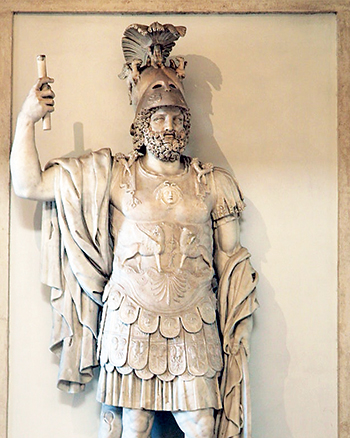
March comes from the Latin “Martius,” named for Mars, the Roman god of war, as military actions often resumed after winter. Initially, it was the first month of the ancient Roman 10-month calendar. But in the 7th century B.C.E., March became the third month after Numa Pompilius, Rome’s second king, added January and February, creating a 12-month lunar calendar.
March ushers in the vernal, or spring, equinox—a.k.a. the first day of spring—usually falling between March 19 and 22, when the length of day and night is nearly equal. Celebrations observing the equinox and its symbolism of rebirth, renewal and balance have taken place since ancient times. That might be interesting to explore further.
Do you know March’s full moon is known as the Worm Moon, named by Native Americans for worms that emerge in spring? March also has seen its share of dramatic weather events. The Great Blizzard of 1888 paralyzed the eastern U.S. with as much as 58 inches of snow in some regions, killing 400 people—half in New York City. Heavy winds created snow drifts as high as 50 feet and melting snow caused severe flooding. The storm paralyzed trains, downed telephone, telegraph and electrical wires, blacked out gas street lamps and trapped people in their homes. Undeterred, however, the Barnum & Bailey Circus still performed two shows at Madison Square Garden—though few besides P.T. Barnum himself reportedly attended.
Ever wonder about the phrase “mad as a March hare?” Known for its, let’s say, “enthusiastic” mating rituals during its spring breeding season; the hare serves as an animal symbol for the month. The mad hare was notably cited by Geoffrey Chaucer in The Friar’s Tale and by Lewis Carroll in Alice’s Adventures in Wonderland. Legends and folk tales suggest the goddess Ostara transformed a bird into a hare that could lay colored eggs, linking the hare to the Easter bunny tradition.
March has witnessed some unusual events throughout history. This might be intriguing: On March 3, 1876, in Olympia Springs, KY, hunks of red meat fell from the sky in what became known as the Great Kentucky Meat Shower. Two men, who tasted the meat, expressed the opinion that it was either mutton or venison, The New York Times reported the meat was later identified as lung, muscle and cartilage tissue, possibly regurgitated by vultures. Yuk! Let’s end on that note because I think we’ve used up all of our space but as yet to have decided what to write about. Maybe next year we can hone in on a topic.

> Read Full Biography
> More Articles Written By This Writer
- There’s No Fool Like An April Fools’ Day Gone Wrong! | Seasons, Stories & Sundays - March 31, 2026
- What To Write About For March? | Seasons, Stories & Sundays - March 16, 2026
- The Beginning Of St. Therese Church In Waynedale - February 13, 2026