

From Cabinet House To Toy House: The History of Ordinary Things
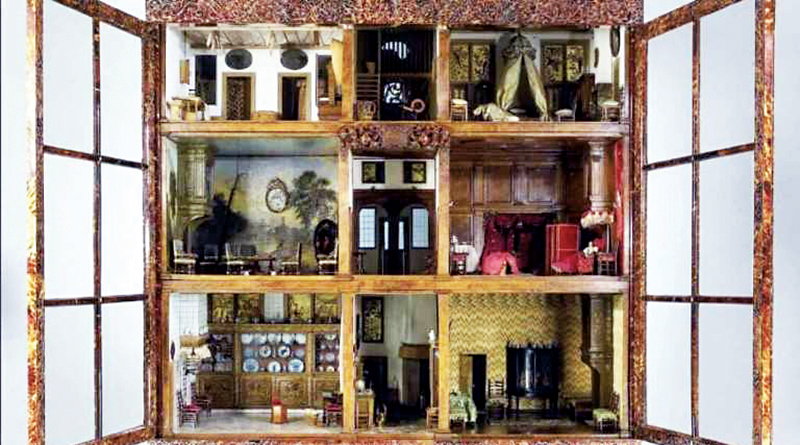
The dollhouses of our youth allowed us to play “house.” Like a modern SIMS game, our dollhouses let us practice running a household and decorating a home. When first designed in the late 1500s, dollhouses were created for show.
Originating in Northern Europe, cabinet houses, now referred to as dollhouses, displayed wealth, social class, and status. These cabinet houses were designed with a glass front which could be opened and closed and was typically locked. Inside the cabinet were displayed miniature handmade items reflecting one’s wealth.
By the late 1600s the dollhouse, now often just one room, transitioned to a useful teaching tool called Nuremberg kitchens. The metal kitchen might contain only a hearth, cooking pots, and a straw broom. Girls created daily living situations within the house. They were not learning work skills, but rather, given the era, they practiced giving orders to the cooks and servant dolls. Dollhouses taught girls how to be the Lady of the House. High end models had the upstairs family living areas and the downstairs with the kitchen, laundry, and servants’ work areas.
In the 1700s the Victorian dollhouse was called a “baby” house. These houses were exact replicas of the house and the interior rooms of the owner. Baby houses reflected the lifestyle of the era with finely handmade furnishings of exotic woods, metals, fabrics, and other materials. These dollhouses were created to show off. They served as symbols of a lady’s wealth and refined tastes. She did not need to give you a tour of her house. She could show you the dollhouse.
In the mid-1800s people had embraced the concept that children needed nurturing, training, and play. The dollhouse became an object of play and fantasy. But for most people, they were unaffordable as custom-built houses. The Industrial Revolution led to mass production, making doll houses more affordable to the middle class. Once the status symbol was gone, the dollhouse became a toy.

By the 1900s, companies in Germany, England, and the United States supplied dollhouses and furnishings of multiple sizes, styles, and price ranges. Germany had been the primary manufacturer of toy dollhouses. During WWI those factories were retooled for wartime needs. Post war, American companies began manufacturing dollhouses.
Dollhouses had a resurgence in popularity in the 1960s-1990s. Once again dollhouses served as a teaching tool allowing young girls to play “house.” Children also developed their fine motor skills, spatial awareness, and critical thinking skills. Dollhouses continue to be a favorite plaything of American children today.
Adult enthusiasts have created a thriving hobby with dollhouses and their decorations. Houses and furnishings typically come in 1:12 scale. Barbie’s house needs 1:6 scale and there are teeny tiny houses at 1:24 scale. In each scale there is a full line of accessories which may include books, wallpaper, pets, plants, parquet flooring, and dishes. Today, technology has introduced the smart dollhouse. In 2024, the global dollhouse market was $1.24 billion USD with growth projected.

> Read Full Biography
> More Articles Written By This Writer
- Tidbits On Clean Shaves | The History of Ordinary Things - March 31, 2026
- How Modern Textiles Came To Be | The History of Ordinary Things - February 27, 2026
- From Cabinet House To Toy House: The History of Ordinary Things - January 30, 2026