

Fabric Designs Across Time: Around The Frame
On January 8, approximately 80 people gathered in the Fort Wayne Museum of Art’s auditorium to enjoy my presentation “The Fabric Makes the Quilt 1790-1979.” When I arrived, the auditorium was set up with 30 chairs. I was asked if I thought that would be enough. I remarked I wouldn’t underestimate the number, especially since I had written an article about my presentation for the Waynedale News and sent the information to various quilt guilds. Attendees started arriving around 4:45 and more chairs were set up. At 5:30 the auditorium was standing room only and people were hovering outside its doors.
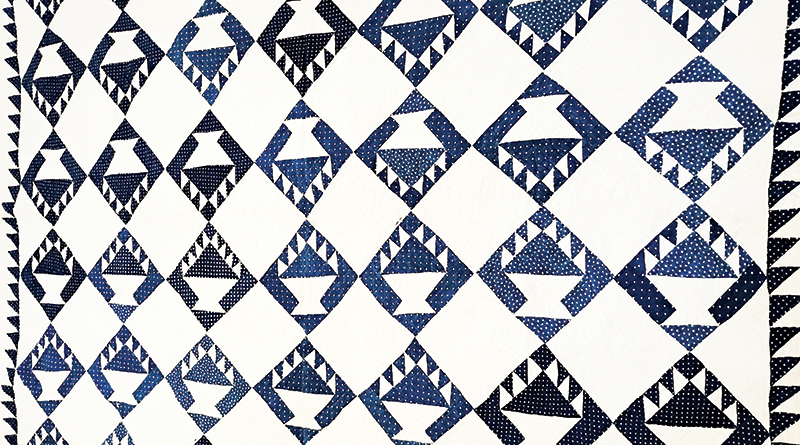
The presentation began with the basics of what is the difference between a quilt and comforter, inner layer materials, and how long quilts have been in existence and used for other purposes.
The presentation’s timeline started in the 1790s when Samuel Slater memorized blueprints of textiles machinery, pretended to be a farmer, emigrated to America, and revolutionized the textile industry. This was also the period that Eli Whitney developed the cotton gin that made cotton seed removal easier and greatly increased the need for cotton and slaves.
Next, we delved into fabric and its components: Fiber, color, and the five categories of design (floral, geometric, conversational, ethnic, and art periods and movements). Slides were also shown of different decades of the five designs.
To place it into historical context, the colors and designs were explored and in-depth information as to how fabric being loaded onto a loom got stuck and the resulting squiggly designs, similar to op-art, became a rage that lasted 40 years. We discussed how a chemist developed a wildly popular emerald-green dye that was the rage and killer of who knows how many people because the dye contained arsenic. We touched on how France, England, and the USA benefitted from World War I when Germany didn’t have the money to pay war reparations, and paid part of their debt in trade of timber, pharmaceuticals, and their chemical dyes. It was shared how a woman cheated and won the Century of Progress Chicago’s World’s Fair Sears quilt contest prize of $1000 and she didn’t make the quilt.

During a technical glitch, the attendees toured the quilt exhibit with Curator and Collection Specialist Sue Slick. It gave me the opportunity to mingle and point out the quilts the FWMoA acquired through me. I was delighted to find attorney Matthew Williams in attendance. We often sit together at North Side High School football games to watch the band perform. I had mentioned the event to him last September and he said he’d like to attend and he did! Soon the glitch was resolved, and I finished my presentation. The attendees departed with a new-found appreciation of fabric, its history, and how it makes our quilts so special. Sue Slick and Vice President and CPO Colleen Huddleson were delighted the presentation drew so many people that had never been to the FWMoA and hope they will return to enjoy other exhibits. A shout-out to Kaylen Buteyn who covered a reference books and fabrics display and answered questions. It took a team!
Lois Levihn is the owner of Born Again Quilts. If you have a quilt or other textile feature, contact her at 260-515-9445 or bornagainquilts@frontier.com.

> Read Full Biography
> More Articles Written By This Writer
- Worldwide Quilting Day 2026, A Time To Celebrate | Around The Frame - March 16, 2026
- From Hillcrest School To Hillcrest Commons: Around The Frame - February 13, 2026
- Fabric Designs Across Time: Around The Frame - January 16, 2026