

Why Gingerbread & Christmas? : The History of Ordinary Things
Ginger root was first cultivated in ancient China, where it was commonly used as a medical treatment for stomach ailments. Gingerbread made an appearance in Europe when 11th-century Crusaders brought back ginger from the Middle East. As ginger and other spices became more affordable to the masses, gingerbread caught on.
An early European recipe for gingerbread consisted of ground almonds, stale breadcrumbs, rosewater, sugar and, of course, ginger. The thick paste was pressed into wooden molds and baked. Monks in the Middle Ages carved biblical scenes or images of saints in the dough before baking it. They then used these gingerbread treats to feed the hungry while providing religious teachings.
In the 16th century, the breadcrumbs were replaced with flour. Eggs and sweeteners were added to achieve a lighter product. The shapes of the gingerbread changed with the season, so flowers in the spring and birds in the fall. Elegant gingerbread decorations became popular in England.
The first gingerbread man is credited to Queen Elizabeth I who ordered gingerbread cookies made to resemble the dignitaries visiting her court. Gingerbread treats became a common sight at European medieval fairs, known as Gingerbread Fairs. The gingerbread cookies were known as ‘fairings’.
The custom of baking and decorating gingerbread houses is attributed to 16th century Germany. There, bakery shop windows began showing decorated gingerbread cookie-walled houses. The famous Brothers Grimm fairy tale of “Hansel and Gretel”, 1812, is associated with the gingerbread house. In the story, the two lost children discover a house in the forest built entirely of treats. The folktale of Hansel and Gretel may date to a 14th century famine in which parents turned children out to fend for themselves.

In 1875, “The Gingerbread Boy” was published in a periodical called St. Nicholas Magazine. It told the story of a boy-shaped gingerbread cookie who brags to everyone that they could not catch him. This is the origin of the human-shaped cookie.
Today, we use “gingerbread” to describe a range of sweet treats that combine ginger with honey, treacle, or molasses. (Treacle is like molasses. Both are made from the sweet syrup created in the sugar-refining process.) Traditional gingerbread contains ginger and sometimes cinnamon, cloves, nutmeg, cardamom, and anise. It can be sweetened with any combination of brown sugar, molasses, light or dark corn syrup, or honey.
Gingerbread is popular across the world. It can take the shape of thin, crisp cookies like snaps, Polish pierniczki, Czech pernik, Russian pryaniki, Croatian licitars, Scandinavian pepparkakor and Dutch speculaas. Typically, the cookies are cut into hearts or other fanciful shapes. Gingerbread can also be a dark, spicy cake. The American version is often served with lemon glaze.
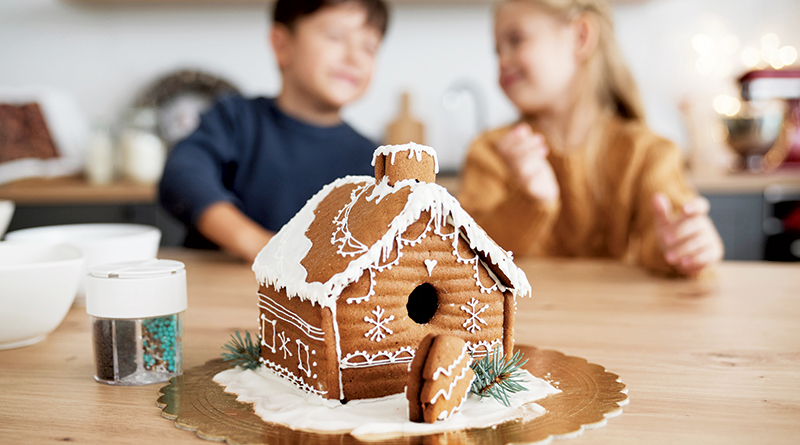
The gingerbread recipe for a house-shaped confection is referred to as “construction gingerbread.” It is not meant to be eaten and is made specifically for building a sturdy house. It can be adorned with icing, candies, fruits, and nuts, but the most important part of the decorating is the FUN. Happy Holidays!

> Read Full Biography
> More Articles Written By This Writer
- How Modern Textiles Came To Be | The History of Ordinary Things - February 27, 2026
- From Cabinet House To Toy House: The History of Ordinary Things - January 30, 2026
- Why Gingerbread & Christmas? : The History of Ordinary Things - December 19, 2025