

The Oldest Native American Building In The Midwest
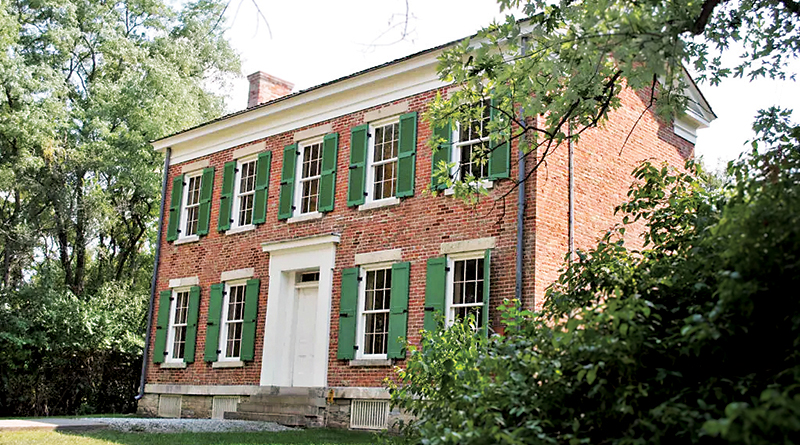
Many people might not realize that they pass by one of the nation’s most important landmarks every day.
On Bluffton Road, a modest brick home sits within easy reach of modern traffic, modern neighborhoods, and modern routines. Step closer, though, and the place asks the community to slow down. The Chief Richardville House at 5705 Bluffton Road is not simply old. It is one of the most consequential historic structures in northeast Indiana, tied directly to the Miami Nation, treaty-era decision making, and the complicated origins of the region itself.
According to The History Center, the house was built in 1827 near the St. Marys River and is associated with Chief Jean Baptiste de Richardville, known in the Myaamia language as Pinšiwa. The same source has described the building as the oldest Native American building in the Midwest and the only surviving treaty house in the nation. Those are big claims, and they explain why this property stands apart from the many historic markers that blur into the background of daily life.
For Waynedale, that significance is not an abstract point of pride. It is a rare surviving place where local history intersects with national history in a way people can physically visit and understand. This is not just a home tied to an influential leader. It is connected to the treaty-making period that reshaped land ownership, regional power, and the lives of people who called this area home. In plain terms, it is a standing reminder that many of the most important decisions in early Indiana history were not happening somewhere else. They were happening here.
According to The History Center, Richardville was considered the richest man in Indiana at the time of his death in 1841. That detail can surprise readers raised on simplified frontier narratives. It also points to a larger truth. Miami leadership was not merely reacting to change. It was engaged in the region’s economy and diplomacy at a high level, negotiating with U.S. officials and shaping the direction of growth during a period when the stakes were extraordinarily high.

The building’s story did not stop in the 1800s, and that continuity helps explain why it still stands. Accounts tied to the site note early 20th century remodeling before later preservation efforts focused on stabilization and interpretation. Historical summaries also note that the Allen County-Fort Wayne Historical Society acquired the house in 1991, a turning point for stewardship and public access. Recognition followed, including listing on the National Register of Historic Places and later designation as a National Historic Landmark, a status reserved for sites considered exceptionally important to the nation’s history. Those designations are not just honors. They signal that what sits along Bluffton Road is not a niche local curiosity, but a place with national weight.
What makes the house especially important now is what it can do that books and plaques often cannot. It holds tension in a way a tidy narrative does not. Treaty history is frequently taught as distant and settled, a chapter that closes quickly. Standing in a treaty-connected place complicates that habit. It pushes visitors to consider who had leverage, what was promised, what was lost, and how those decisions shaped the map that exists today. It also invites a more accurate view of Native presence. The Miami story is often framed as prehistory followed by disappearance. A site like this makes it harder to tell that version without challenge, and it creates space to talk about continuity, survival, and sovereignty.
The house also matters because it is vulnerable in the most ordinary way. Development pressure, changing neighborhoods, and daily neglect can erase historic places without a dramatic moment of loss. Once they are gone, the community is left with secondhand memory and a thinner record. Preserving and interpreting the Chief Richardville House protects something rare: an authentic, physical point of reference that anchors public understanding. It raises the standard for how Fort Wayne tells its own story, not as a collection of convenient legends, but as a fuller account that includes Miami leadership as central, not incidental.
Guests can visit the Chief Richardville House May through November during scheduled open house hours or during special events. Learn more about this historic landmark and how to visit through The History Center’s Richardville House information page at fwhistorycenter.org/richardville-house.

> Read More Information About Us
> More Articles Written By Our Staff
- Stillwater Hospice Receives Wildlife Habitat Certification - May 24, 2026
- Local Schools Compete To ‘Can-struct’ & Fundraise - May 24, 2026
- YWCA N.E. Indiana To Host Event Focused On Pre & Postnatal Wellness - May 24, 2026